What is Social Media Listening? How To Use It For Marketing?

Key Takeaways
- Social media listening empowers brands to track macro industry conversations and synthesize qualitative consumer sentiment into actionable strategy.
- Analyzing online discourse around competitors reveals unfulfilled market gaps and product differentiation opportunities.
- Integrating social listening insights into marketing campaigns ensures promotional messaging resonates deeply with real audience pain points.
- Establishing proactive query monitoring helps brand strategists identify emerging industry trends and cultural shifts ahead of competitors.
- Utilizing specialized listening technology transforms unstructured social noise into structured intelligence for product innovation and customer retention.
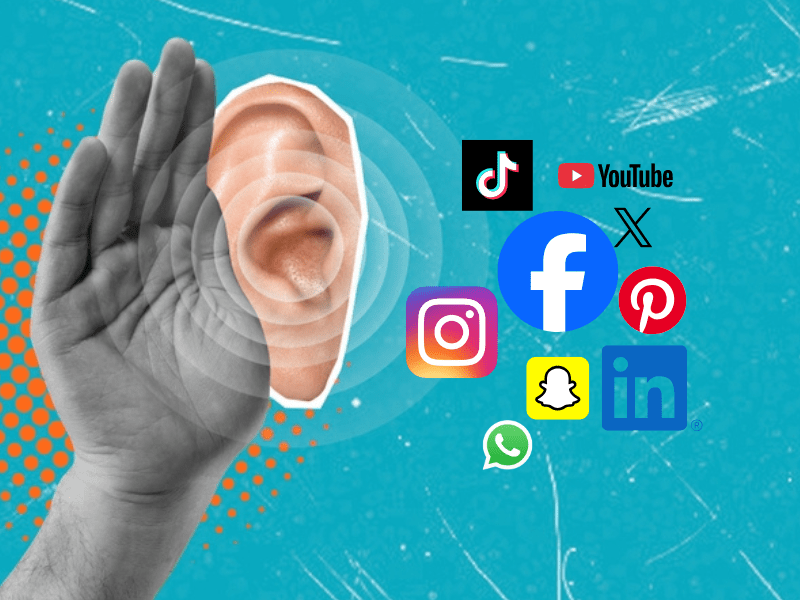
Social media listening means understanding what people say online and why they say it. It focuses on naturally happening conversations, reactions, and opinions across platforms.
The following blog describes what social listening is, how it supports marketing decisions, real-world examples of how social listening has been used by brands, influencer use, strategy planning, best practices, and social listening vs. social monitoring.
What is Social Listening?
Most people misunderstand exactly what social listening really is, thinking it's merely tracking mentions. In reality, it is the art of observing online conversations and finding meaning in them. It looks at repeated thoughts, tone, and intent behind what people say.
Social media listening is a study of how people actually talk in real-life situations. These conversations occur organically, without prompts or questionnaires. Because of this fact, the feedback seems honest and unfiltered.
A focused social listening strategy looks to patterns that emerge over time. It helps teams recognize common questions, shared frustrations, and topics that gain attention over time. Those insights drive better marketing decisions.
Unlike basic tracking, social media listening does not stop at numbers. It connects emotions with topics and helps organizations understand how audiences truly feel before decisions are taken.
Real-World Social Listening Examples
You can check the following list to find out some of the biggest real-world social listening examples:
McDonald’s and the Grimace Shake Buzz
McDonald's closely observed and listened to the online activities as the Grimace Shake launched in June 2023 for a limited time to celebrate Grimace's birthday. It created a lot of craze across social media platforms in the form of memes and user-generated content. The marketing team of McDonald's was able to notice this buzz and highlighted the standout user videos. This increased the popularity and saw more people start to participate in the trend. This provided the complete campaign with more attention and better visibility.
Hilton Highlights Travel Tales from Online Mentions
Hilton Hotels leveraged social listening to understand what was being said by travelers on TikTok and Instagram. Stories of travel woes, from the rental space to stays elsewhere that were below par, could always take on a different hue of reason to opt for Hilton instead for better options. This resonated a lot with the younger travelers and shaped Hilton's summer messaging.
Starbucks Spots Trends by Listening
Starbucks keeps the pulse for social conversations to stay on top of emerging trends early. When certain drinks start to gain traction online, or when seasonal preferences begin to emerge, the brand uses that insight to steer product and marketing plans. In this way, social listening allows Starbucks to understand what's trending in customer tastes and to plan offerings to match those tastes.
How to Use Social Listening for Influencer Marketing?
You can use the following list to identify where social listening could be used for influencer marketing:
1. Identifying Natural Conversation Leaders
You can also use social listening for influencer marketing by noticing those people who talk a lot about relevant topics. These individuals naturally affect discussions without forced promotion or scripted messages.
2. Know Audience Alignment
Social media listening helps assess an influencer's audience to verify that their interests align and resonate with your values. It avoids those partnerships that will seem disconnected or unclear to viewers.
3. Monitor the Direction of Conversation
Social listening in influencer marketing uses proper observation of how the conversations shift once the influencer content appears. This helps to understand whether your message adds value or fades away.
You may also like to read: What is Social Media Takeover, Its Benefits & Strategies?
How to Build a Winning Social Listening Strategy?
A strong social listening strategy sustains focus and utility of efforts: it turns listening into action, not observation.
1. Clear Listening Objectives
A social listening strategy begins with determining what is to be learned. Goals may be to understand sentiment, find common issues or monitor interest in a topic over time.
2. Follow Topics
Social media listening works even better when it encompasses industry topics and audience interests. This wider view provides context and reduces misinterpretation.
3. Apply Insights Across Planning
A social listening strategy will only become truly valued when insights are acted upon. Teams should apply findings to content planning, messaging tone, and timing of communications.
Best Practices for Social Listening in Organizations

The best practices for social listening inside the organization stress consistency, clarity, and shared learning.
1. Share insights across teams
One of the best practices of social listening within organizations includes sharing their insights outside of marketing teams where decisions become more aligned and better informed.
2. Periodically peruse conversations
Social media listening should be reviewed on a regular schedule. Regular reviews help teams catch slow changes before they turn into big issues.
3. Read Context
The best practices for social listening in the organization include understanding tone and intent. One comment rarely tells the full story, but repeated patterns often do.
Key Differences: Social Listening Vs Social Monitoring
Understanding social listening vs. social monitoring helps organizations choose the right approach for their goals.
1. Focus
Social monitoring traces mentions and direct messages. Social listening focuses on meaning, patterns, and repeated opinions.
2. Time View
While monitoring looks at immediate activity, social listening has to do with studying trends over longer periods.
3. Strategic value
Monitoring enables quick responses. Social listening strategy supports long-term planning and better decision-making.
Conclusion
Social media listening helps organizations understand what people actually think and expect. Implemented with care, the practice sharpens marketing clarity and influencer planning quality, and improves communication without relying on assumptions.
FAQs
How does social media listening inform product r&d and feature roadmaps?
Social media listening provides product development teams with direct access to unfiltered consumer feedback regarding existing product flaws and desired feature requests. By aggregating recurring feature requests and common user complaints across online forums and social channels, engineering teams can prioritize product roadmaps based on real consumer demand rather than internal assumptions.
What strategic role does share of voice (sov) analysis play in competitive benchmarking?
Share of Voice analysis measures the percentage of overall industry conversation controlled by your brand relative to key market competitors. Tracking SOV fluctuations over time reveals how promotional launches, crisis events, or market entries impact public mindshare, giving executives a clear benchmark for evaluating brand dominance within a vertical.
How do enterprise marketing teams integrate social listening data into crm systems?
Integrating social listening platforms with enterprise CRM software connects aggregate social conversation trends with individual customer records. This cross-system data synchronization allows sales, marketing, and account management teams to track customer sentiment changes, identify upsell opportunities, and deliver hyper-personalized messaging throughout the sales funnel.
What are the most effective keyword Boolean operators for filtering noise in social listening tools?
Building precise listening queries requires deploying Boolean logic operators such as AND, OR, NOT, and exact phrase quotes to eliminate irrelevant search results. Combining product terms with negative exclusions prevents high-volume homonyms or off-topic conversational noise from distorting sentiment metrics and campaign analytics.
How can social listening predict and prevent potential supply chain and inventory bottlenecks?
Monitoring consumer discussions surrounding product availability, delivery delays, and regional out-of-stock complaints serves as an early indicator of supply chain friction. Identifying localized inventory shortages through consumer posts allows logistics and operations teams to reallocate inventory swiftly before negative fulfillment experiences harm brand reputation.
This content was created by AI